

From the creative schools: Ken Robinson
Sometimes I just think, and keep thinking about the education system that we have in our context. I just keep thinking and trying to remember how I was educated by the system to be capable of thinking the thoughts that I have in my mind right now.

In today’s world, we take schooling and the educational process for granted. Almost all children today start schooling around the age of five and go through twelve years of compulsory schooling. Going to school seems like a natural process now but the concept of mass education is recent innovation only. The concept of mass education came in the middle of the nineteenth century as a part of the industrial revolution.
Previously, the vast majority of people lived in the countryside and worked on the land. Cities were mainly small centers of trade and commerce. The lives of the people were shaped by the rhythms of the season and rituals of their beliefs. They were mostly illiterate and had little education on whatever craft they practiced for a living. Schooling was only for rich and noble people. Then the industrial revolution happened and it changed everything.

From the middle of the eighteenth century, technological innovations transformed our traditional method of production which led to the creation of entirely new products made from iron and steel. Machine tools, steam engines, railways and trains, iron bridges, and mechanical ships started to fill up the world and it demanded huge energy from coal and gas along with the whole bunch of working population for mining and refining raw materials. This bought a whole population into cities for employment.
As the Industrial Revolution marched ahead to the nineteenth century a new kind of society began to form and people began to divide into classes. There were people of the working class who sold their physical labor to run all the giant machinery of industrialism. Then, there was old nobility who were rich and supreme in society. Then there emerged a society of people as a new middle class which consist of owners of industry, lawyers, doctors, accountants, entrepreneurs, and investors. With this people in the society began to press politically for the way they were governed and the new political order began to take shape.
Industrialism needed an army of manual workers to conduct the repetitive and exhausting labor in mines, railways, factories, and shipyards. The work required skilled and trained manpower in the fields of engineering, manufacturing, mining, and construction of the modern world. The work required clerks and managers to handle the management and administrative work. They only required a few numbers of doctors, lawyers, academicians, and scientists who can provide expert services only to those who can afford them.
Industrialism needed more manual workers rather than college graduates so the whole system of mass education was built like a pyramid, with a broad base of compulsory education for all, a small section of secondary education, and a narrow apex of higher education. So, the system of mass education was then decided and planned in the way that all people were compulsory to take basic education then were eligible for labor works, then those who took secondary education were eligible for basic administrative and management works and few who pursue higher education and get professional degree were eligible for high profile jobs. This system is still in the act and will be in the act for a while.
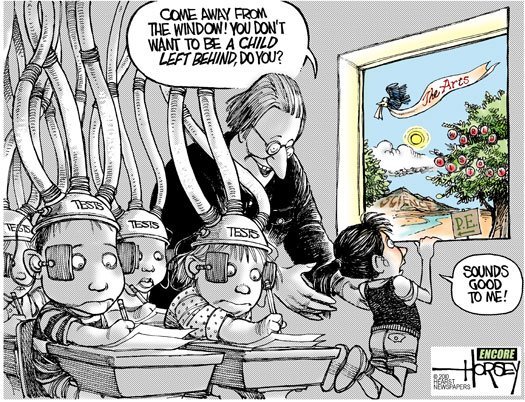
The purpose of the whole system of mass education in the principle of industrialism is the industrial manufacturing of identical versions of the same products and the ones that don’t fit in the system are thrown out or reprocessed. The system of mass education was designed to mold students to certain requirements. The industrial process demands specific rules and standards. The same process is applied to education which is based on compliance in curriculum, teaching, and assessment.
The industrial process is gradually progressive. Raw materials are turned into products through sequential stages, each with some form of testing and gateway to the next stage.
Mass education was designed in the same process. There are a series of stages, from elementary school to high school to higher education. Students are organized into separate year groups and progress through the system in batches that are defined by the date of birth.

Industrial production is all about the market demand. If the demand rises or falls, manufacturers just adjust production to meet them. The same kind of phenomenon is going on in mass education. Industrial economies require comparatively few administrative and professional workers, the number of students entering university is tightly controlled and if the demand for intellectual labor is grown, the university just opens the doors to the economy. The growing application of STEAM (Science, technology, engineering, art, and Mathematics) is also another example of market principles applied to education.
As in typical factories, high school and higher education in particularly organized around the division of labor. In high schools, the day is usually segmented into a regular chunk of time. When the bell rings, everyone changes tasks and starts doing something else instead. The teacher specializes in particular subjects and moves through the day from class to in separate segments. These principles work perfectly in manufacturing and managing products but not educating people.


After checking out a handful of the blog articles on your site, I truly appreciate your technique of writing a blog.
I saved as a favorite it to my bookmark webpage list
and will be checking back in the near future. Please visit my website as well and
let me know what you think.
You should take part in a contest for one of the finest blogs on the net. I will recommend this web site!
דירות דיסקרטיות בהרצליה