
Among traditional stories, god folk tales, and events that shaped our culture; the story of Manma and Bhadai Purnima is one of the aspects that define interesting Nepalese culture. The story all begins in a place called Juphal in Dolpa. Juphal is not the headquarter of Dolpa, Dunai is but it is the place in Dolpa having access to the airport and most of the facilities seen in Dolpa.
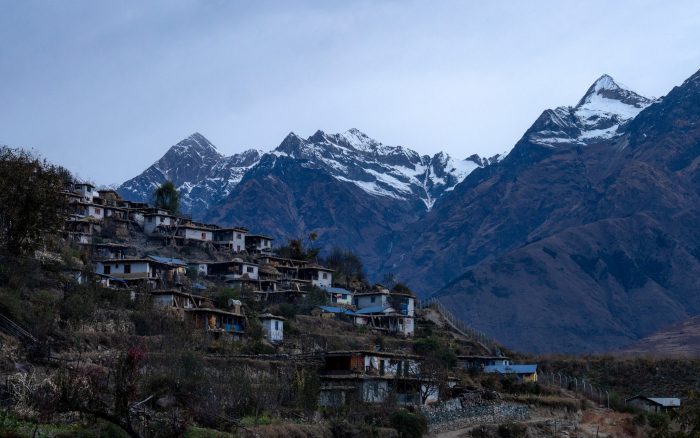
In ancient times, it is believed that the Manma Deuta (Nepalese word for god) who was also called Votey Deuta was traveling down from Tibet. During his travel, he rested in Juphal and quite liked the place. He then had a conversation with the Guru Deuta who was already there and they both came to the agreement of co-existing together to live in Juphal after taking permission from the Thakuris. Later, as the population grew and time passed, Manma was identified as the local god of Juphal, and the whole festival of Bhadai Purnima was started to celebrate in Juphal to worship Manma. Bhadai Purnima is one of the main festivals of people living in Juphal, which is done to please the existence of their local god (Manma) through a series of rituals, worshipping, and sacrifices. The Purnima is also found to be celebrated in some parts of Dolpa and far Rukum. The Purnima has been passed down from the 20th generation and all the people of diverse castes, ethnic groups, or classes celebrate it despite their differences. Bhadai Purnima starts with the full moon day of Shukla Paksha and generally lasts up to 15 days.
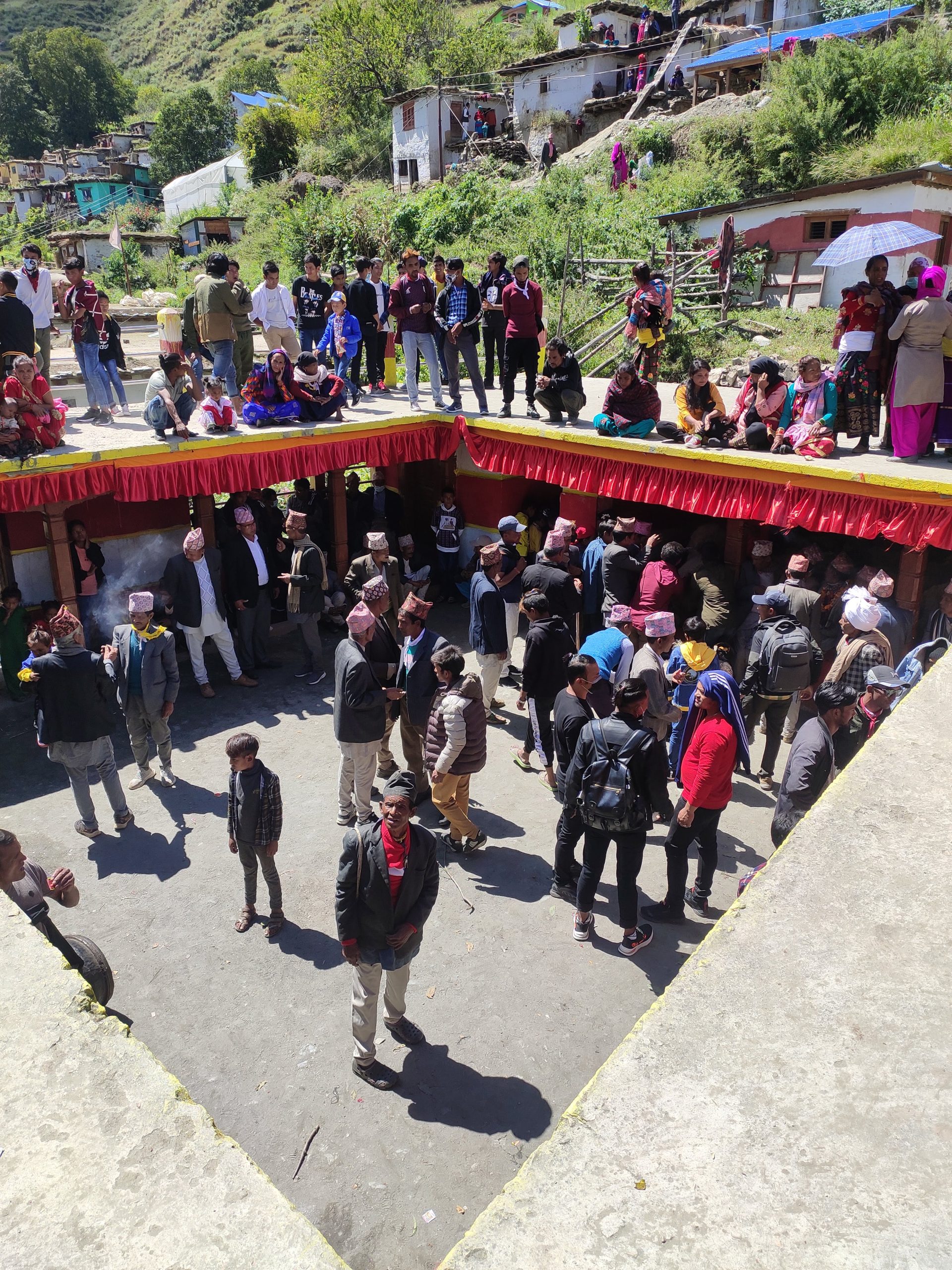
The inauguration of the festival is done by gathering the 350+ household villagers in Juphal to the sacred temple. The team of musicians (Damai) along with local singers stays all night and is entertained by the songs and dances of the accompanying villagers. The process is repeated day after day with various planned activities like puja (worshipping), and making tetey (Local sel-roti) for 15 days until the festival is completed. The whole 15-day festival is filled with activities, fun, and rituals all day and night.
All 350+ households partake in some responsibilities in the festivals despite their differences. The most interesting part of the festival for me was the role division among the people to work for the festivals. People were allocated tasks in the festivals according to their caste. For eg, People from Dhami group were allocated the task of sacred Dhami Nach which needs to be performed on the final day. Similarly, Damai’s were responsible for Bhukur (Traditional Nepali musical instrument), Pujari was responsible for worshipping the god, Thakuri was responsible for a particular task, and so on. The workers of the festivals were awarded prasad (offering left from worshipping god).
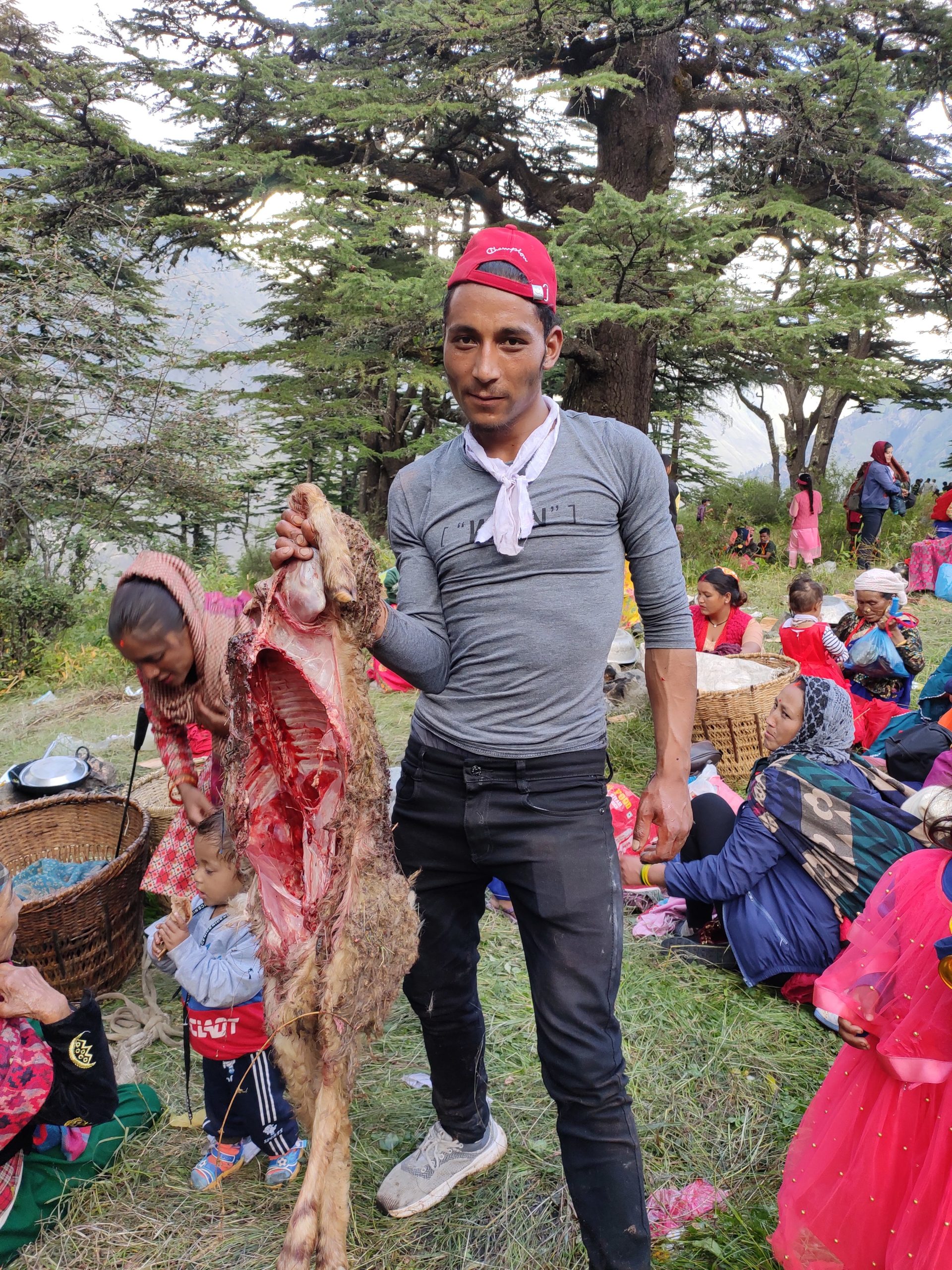
There is also a very interesting system to allocate Prasad for the whole village. To Clarify Prasad are the offerings that the people make to the gods, which could be anything. In Bhadai Purnima, families of the whole village make an offering of a goat if they have a birth of an elder son in their family. Thakuri offers a goat if they have any good happening or birth of an offspring in the family while any woman from the village who gave birth in a recent year must make an offering in the festival. The offering averages around 50 goats and all of them are offered to Manma Deuta on the final day of the festival. The sacrificed goats are then distributed to the whole village. The head is given to Dhami, the Tail with a portion of meat is given to Damai, and so on.
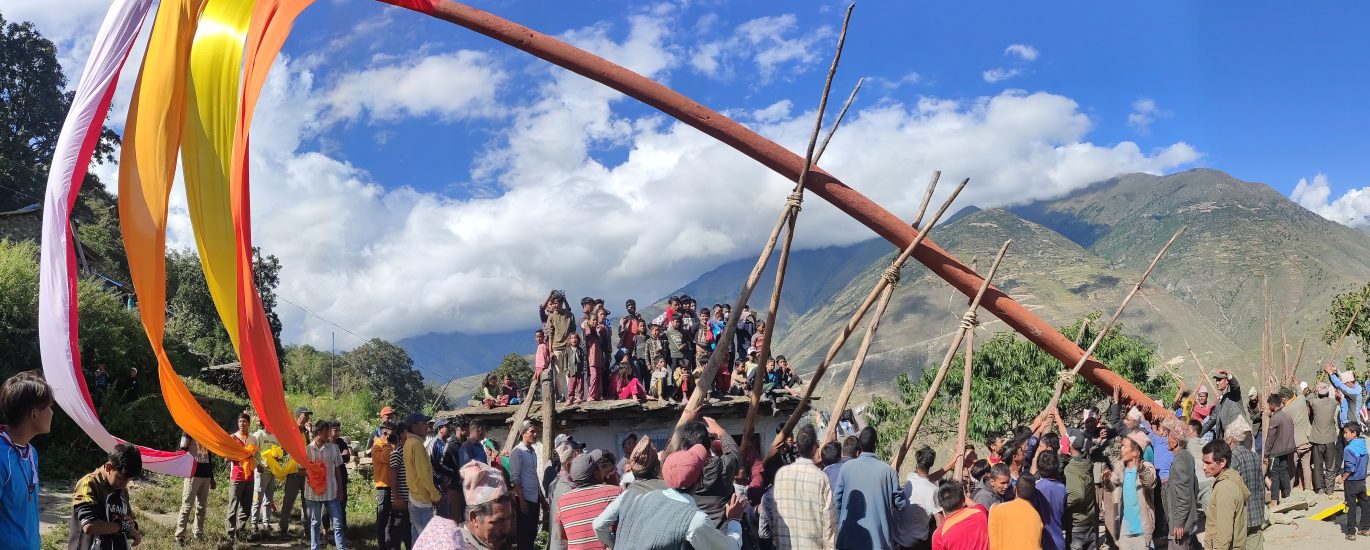
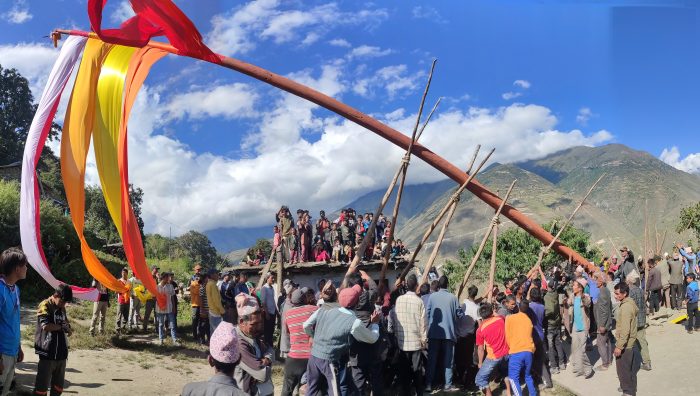
After the inauguration day of the festival, each day villagers gather in the temple and continue with their Bhajan (religious song) all day and night. On the 14th day of the festival, there’s one tradition of changing the flags of the pole erected on the temple premise (Lingo). The 55 ft tall lingo has multi-colored flags which are changed yearly with proper ritual.
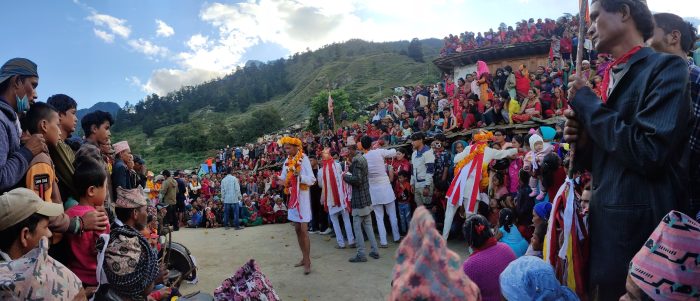
With 15 days long Purnima is celebrated, and the last day is the most important, and busiest day for the people of Juphal. Women if the villages early in the morning travel up to the Mandaba (The main temple of Manma situated at the top of the hill in Juphal) to prepare roti, tarkari, and raksi while the men of the village prepare for the main event of the festivals which is Dhami Naach. Men also handle the sacrificial ritual of cutting 50+ goats which came as an offering from the villagers. Firstly, the Dhami Naach is performed in an open place in attendance of all the villagers, then the Dhamis and Pujaris are then slowly escorted towards the temple of Juphal. After a few worshipping and dancing, the whole crowd slowly proceeded toward the main temple Mandapa. Again, Dhamis perform their dance along with spreading their ritual blessing in their own way. After the dance, the Dhamis and Pujaris get into the temple where the Kul Dewta (Main God-Manma) is located while the observers go to the stalls set up by women to have roti, tarkari, and raksi. At the same time, Men will be working on killing the offerings made to Manma.
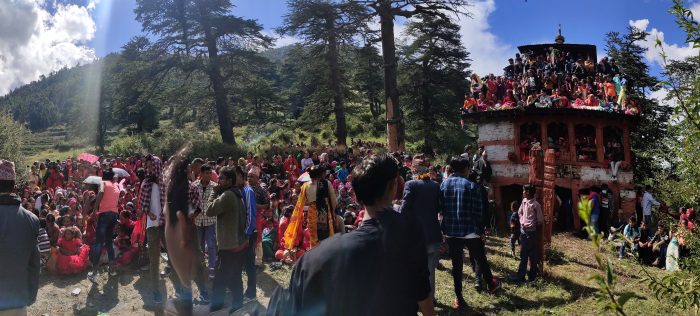
The whole festive of Bhadai Purmina seems like chaotic Madness to an outsider who is not familiar with the culture of Juphal. The energy, excitement, and dedication that the whole village has for the festival and their local god is just amazing. They continue to celebrate, Sing, dance, and enjoy themselves for 15 straight days. It is just insane to witness how crazily the villagers devote themselves to the rituals of the festivals. It is amazing and crazy at the same time to witness and be part of the festival. So this is how the story of Manma has continued to live on, through the people’s dedication, belief, and blessings.


It’s an amazing piece of work 😊.
Thank you brother <3